March 17, 2026
Survey reveals strong teacher confidence in tackling children’s reading challenges
New research shows a profession willing to act on children’s reading – but hampered by a growing gap between what schools know and what is happening at home
The findings come from a nationally representative survey of 1,013 UK teachers commissioned by education technology company Renaissance and published today in a new report, Between the Lines: What teachers really think about children’s reading in 2026.
Nine in ten teachers (91 per cent) are aware of the evidence that 15 minutes of daily reading makes a measurable difference to children’s skills and attainment. Eight in ten (82 per cent) are confident their school has the expertise to support struggling readers, and nearly two-thirds (64 per cent) believe daily reading of 15 minutes or more would be feasible to introduce. Eight in ten (81%) also accept that alternative formats – audiobooks, graphic novels, comics, reading on screens – should count as valid reading, though opinion splits evenly on whether parents agree: 42 per cent think they do, 38 per cent think they do not.
But teachers are far less certain the message is getting through to parents. Fewer than one in four (23 per cent) believe parents are aware of the 15-minute evidence. Almost two thirds (63 per cent) actively believe they are not. Seven in ten teachers (70 per cent) say parents and carers bear primary responsibility for encouraging children to read outside school. And yet a third of all teachers (33 per cent) doubt that our children’s reading crisis can be solved.
Asked what challenges children face with reading, screen time tops the list, cited by 86 per cent. Insufficient support at home follows at 82 per cent, with concentration and attention problems at 74 per cent. Just 27 per cent point to a lack of support within schools themselves. And only one per cent say reading outside school is the school’s job alone.
In practice, even the 15-minute threshold is far from universal within schools. Just under half of all schools (48 per cent) have 15 minutes or more of dedicated reading time. Among secondary schools the figure falls to 28 per cent, compared with 62 per cent in primary. Timetable constraints are the most cited barrier (71 per cent), followed by competing curriculum priorities (53 per cent).
Set against National Literacy Trust data showing that only half of parents now read with their child daily – down 15 percentage points since 2019 – the Renaissance survey reveals a growing disconnect between what teachers know, what schools can do, and what is happening at home, suggesting the opportunity for closer home/school collaboration.
Importance of daily reading
The evidence on daily reading time tells its own story. Renaissance’s research tracks the cumulative word exposure of children across their school career: those who average 30 minutes or more of daily reading encounter around 13.7 million words by the time they leave school; those reading for fewer than 15 minutes encounter just 1.5 million. That difference – more than 12 million words – is what researchers mean when they talk about the reading gap.
Crispin Chatterton, Director of Education, Renaissance, says: “This is not a gap in teaching. This is a gap in time. Our analysis of more than 2.2 million students’ reading data shows that 15 minutes of daily reading is the minimum that makes a measurable difference. Children who read for fewer than five minutes a day saw the lowest progress in reading ability. Those reading between five and 14 minutes made sluggish progress that fell below national averages. But at 15 minutes and above, reading gains rose sharply – exceeding the average and continuing to climb. Students reading just over half an hour a day saw the greatest gains of all.
“In short, 15 minutes is the point at which reading practice stops being tokenistic and starts doing real work.
“What comes through most clearly in this data is that teachers are ready to act. The challenge is making sure parents have the same information teachers do. And that schools have the time and resources to put what they know into practice.
“There remains a real cause for optimism,” Chatterton adds. “Teachers’ strong embrace of alternative reading formats, their widespread understanding of the 15 minutes evidence base, and the fact that nearly two-thirds believe daily reading time is achievable all point to a profession not just ready to act but energised to drive meaningful change.”
The full whitepaper, Between the Lines: What teachers really think about children’s reading in 2026 is available at https://uk.renaissance.com/resources/between-the-lines
CASE STUDY: Irchester Community Primary School, Northamptonshire
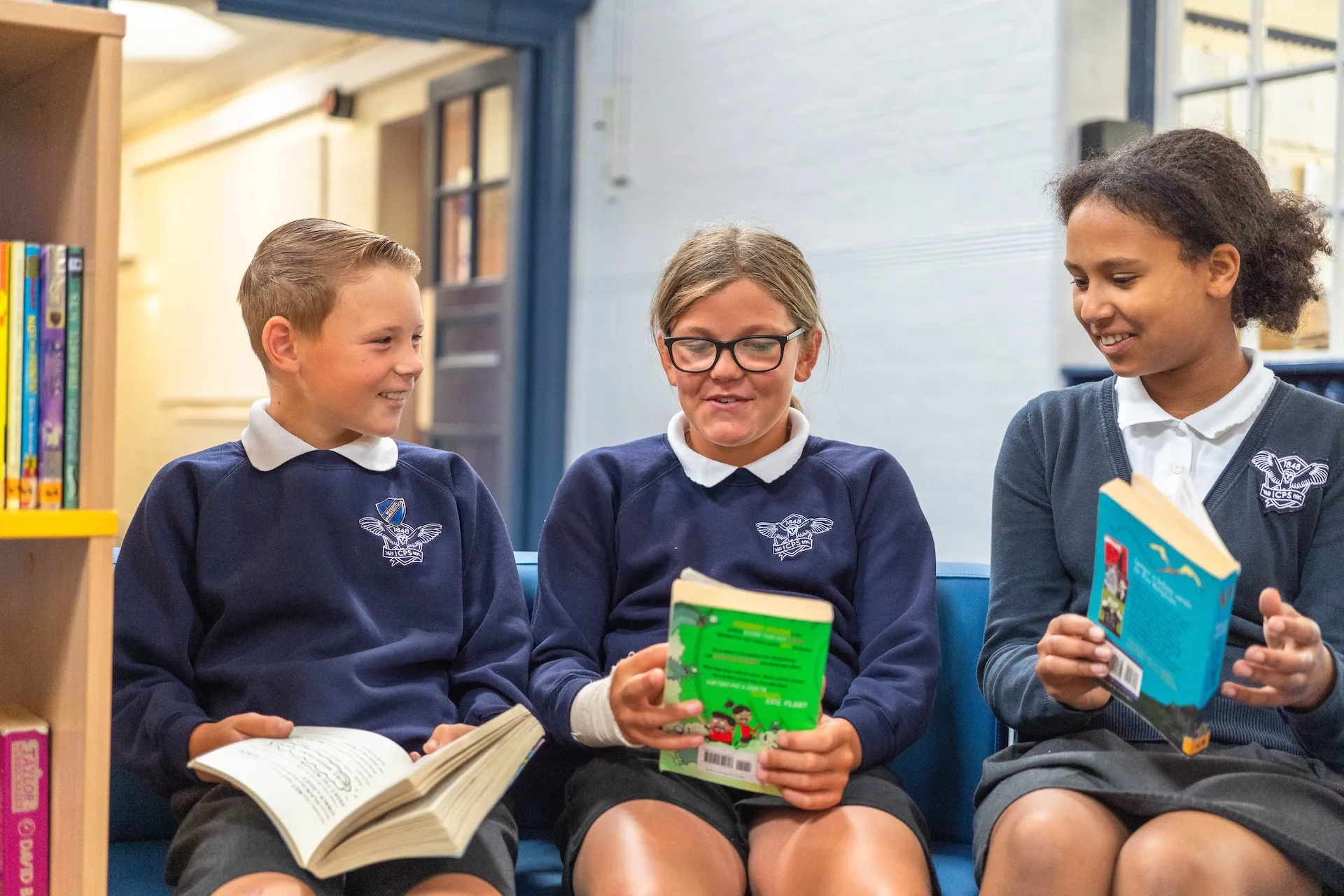
At Irchester Community Primary School, a large village school in Northamptonshire serving a community with elements of deprivation, reading is anything but an afterthought. Reading Lead Rebecca Richardson describes a Year 6 library packed with boys hunting for the latest Alex Rider graphic novel or football title. The school’s 8,000-book library is open from the moment children arrive. An outdoor reading area – complete with wooden chairs, reading stools and a fire pit – draws pupils in at lunchtimes. Every day ends with half an hour in which a novel is read aloud, purely for pleasure.
Irchester has used Renaissance’s Accelerated Reader programme for around twelve years, testing pupils up to six times a year and rewarding progress through certificates, a monthly reading cup and a millionaire reading scheme. The approach is deliberately pressure-free: children are not restricted to specific book levels, and the emphasis is on enjoyment over compliance.
Many of Irchester’s families have a less prominent reading culture at home – which, Mrs. Richardson says makes what happens in school all the more important. “When we look back on progress, reading is never an issue. And I think it’s because the kids are reading all the time. They’re so used to quizzes that when they do a comprehension paper in a test situation, they think it’s the same thing. It really takes the pressure off.”
ENDS
Notes to editors
The findings are based on a YouGov survey of 1,013 UK teachers, conducted online between 9 and 21 February 2026. The sample is nationally representative.
About Renaissance
Renaissance is a global leader in edtech with a clear mission: to accelerate learning for all children and adults of all ability levels and ethnic and social backgrounds, worldwide. It is committed to providing schools and school groups around the world with insights and resources to accelerate learning and help all students build a strong foundation for success. Find out more about Renaissance here.