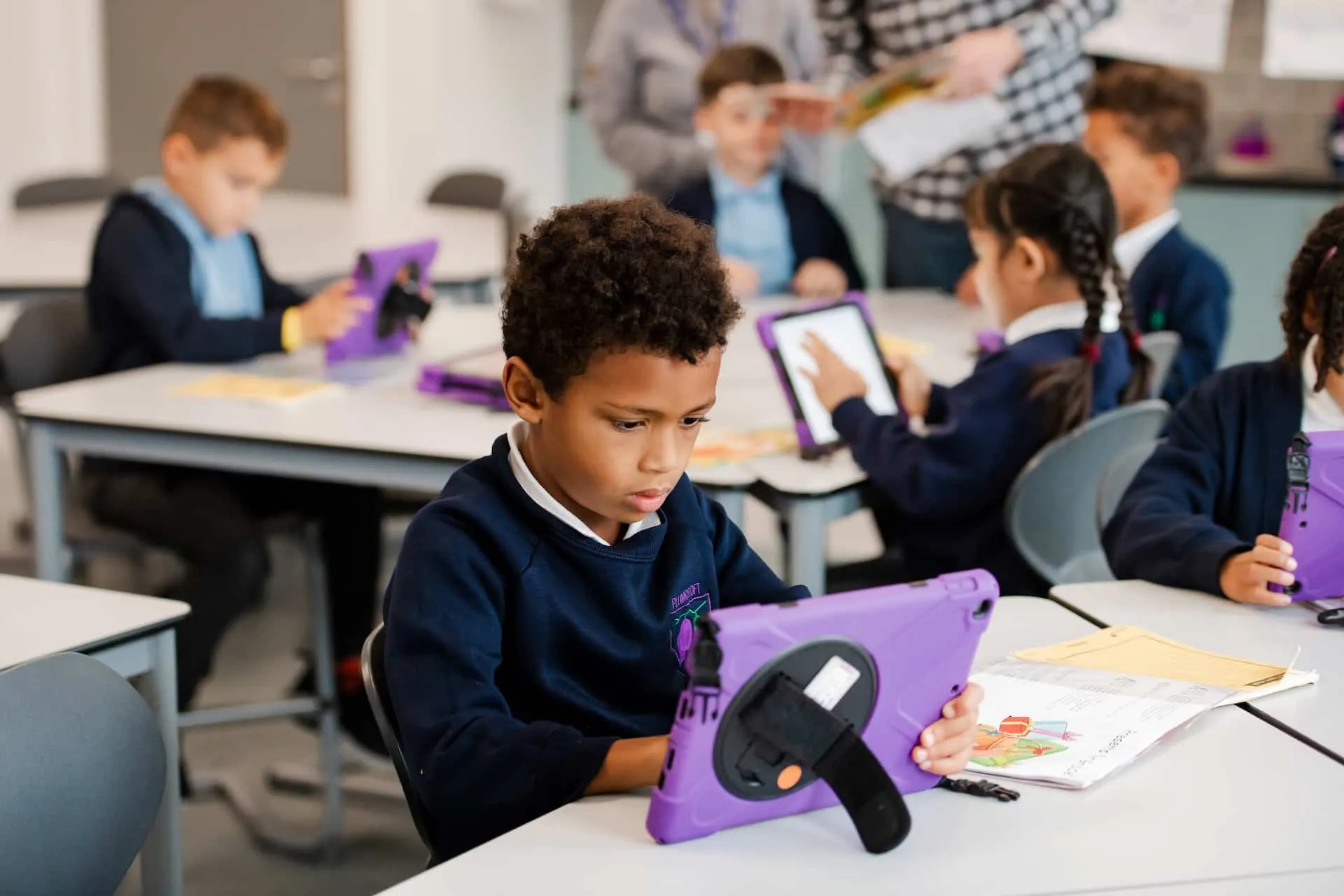
Connect Education Trust serves approximately 3,800 pupils across eight diverse schools in North London, with a strong commitment to inclusion and equity. At the heart of the trust lies a mission centred on Create, Care, and Empower, and its dedication to fostering a collaborative environment where schools work in partnership to embrace creative approaches and ensure dynamic and engaging learning experiences.
Recognising the challenges of personalised learning, the trust embarked on a research-driven approach with a goal to develop innovative strategies that will empower educators and students, ensuring learning is tailored to individual needs rather than a one-size-fits-all approach.
Personalising learning for every pupil
The trust supports a higher proportion of pupils with SEND (23% vs. 17% nationally), with 85% from ethnic minority backgrounds and 38.4% eligible for free school meals, reflecting its commitment to disadvantaged communities. At its core is a culture of care and empowerment, creating inclusive environments where all students and staff are supported to thrive.
Despite having a one-to-one Chromebook strategy in place before the pandemic, we found that digital learning was uneven across schools. While some classrooms were thriving, others were still rooted in traditional, one-size-fits-all teaching. The traditional model of one teacher delivering the same lesson to 30 pupils wasn’t meeting the needs of all learners, especially those with SEND or those ready to move ahead more quickly.
Too often, pupils were being taught at the same pace, regardless of their individual needs. This was frustrating for high-attaining pupils who wanted to move ahead, and it left others struggling to keep up.
We needed a solution that would help us personalise learning, increase engagement, and support our teachers with planning and delivery. That’s when we discovered Nearpod.
Why Nearpod?
We first encountered Nearpod platform through one of our schools, Grange Park Primary, which had begun using it independently. The impact was immediate and impressive. As part of a wider research project led by Dr Fiona Aubrey-Smith, we observed classrooms across the trust and saw how Nearpod was transforming learning. Pupils were more engaged, teachers were better supported, and lessons were more dynamic and inclusive.
What stood out most was Nearpod’s ability to bring everything together in one place. Teachers could plan and deliver entire lessons without switching between platforms. The collaborative board, immersive reader, videos, quizzes, and self-paced learning features were easy to embed. These tools were significantly impactful, especially for pupils with SEND, who benefited from the dignity and independence these tools provided. This not only saved time but also made lessons more interactive and accessible.
Nearpod allows us to bring everything into one place. That has been the absolute key for us.
Embedding Nearpod into our pedagogical strategy
We didn’t rush into our decision. After a year of research and evaluation, we made the strategic decision to roll out Nearpod across all eight schools. For the research-led strategic approach that we took, we:
- Identified early adopters: Two schools began using Nearpod, which sparked interest across the trust because the transformation has been remarkable – engagement was up, outcomes improved, and the quality of learning is outstanding.
- Conducted trust-wide research: We evaluated classroom practice and pupil voice across all schools, supported by external research.
- Chose Nearpod strategically: Based on usability, impact, and long-term viability, we selected Nearpod as our digital learning platform.
- Invested in CPD and collaboration: We embedded Nearpod into our pedagogical strategy, supported by ongoing training and a network of deputy heads and subject leaders.
Impactful Outcomes
Since implementing Nearpod, we’ve seen measurable improvements across the trust. Pupil outcomes have risen significantly above national averages, and engagement has improved, particularly for pupils with SEND. We saw:
- 68% of pupils achieved the expected standard in reading, writing, and maths at Key Stage 2 – well above the national average of 61%.
- Pupils with SEND are thriving, thanks to features like immersive reader, self-paced learning, and collaborative boards.
- Two schools rated ‘Outstanding’ in all areas by Ofsted in 2025, with inspectors praising our use of digital technology and personalised learning.
- 85% passed the phonics screening check (national average: 80%).
- The multiplication times table national check (in Year 4) is at 46% significantly above national of 34%.
- Attendance has improved year on year while we have been using Nearpod and is now significantly above national levels.
For our pupils, the ability to work at their own pace with dignity and equity has been a really important part of this.
Building a long-term digital strategy
We’re not just using Nearpod – we’re building a long-term strategy around it. We’ve developed a pedagogical strategies document that outlines effective teaching approaches and the digital tools that support them. Nearpod features prominently throughout. We’ve also created bite-sized video clips of best practice, so teachers can see strategies in action, even if they can’t visit another school.
One of our most powerful tools has been self-paced learning. It’s not just for pupils with SEND — it benefits everyone. High-attaining pupils can move ahead, while others can take the time they need. Teachers act more as facilitators, guiding learning rather than delivering it all from the front.
As we continue to evolve our strategy, and exploring digital tools to personalise learning, Nearpod remains central to that vision, supporting not just what we teach but how we teach it – giving the flexibility, support, and innovation we need to keep moving forward.