November 10, 2026
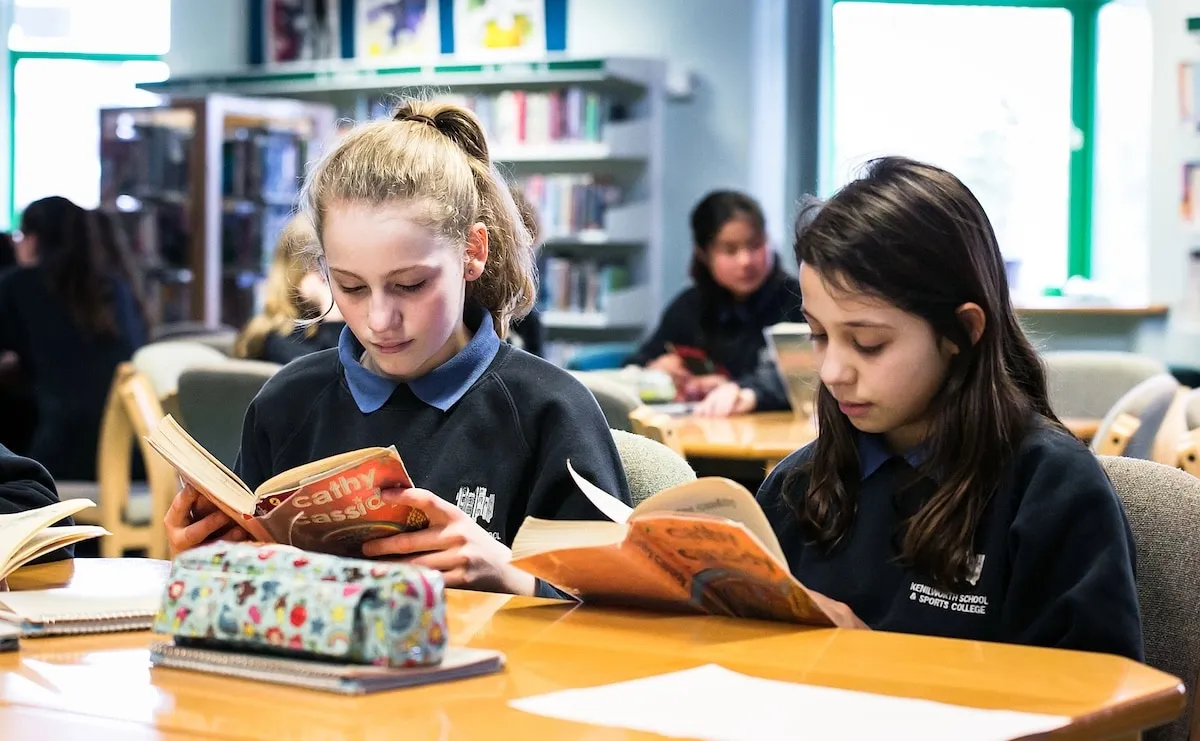
Moving from primary to secondary school changes a lot for students. Their timetable becomes more complex, their social world expands and they have greater independence over how they spend their time.
Reading habits change too.
Particularly at a time when only 1 in 5 students aged 8-18 read daily in their free time, a crucial question arises for school leaders: what happens to students reading habits as they make the transition to secondary school?
Our recent webinar with the National Literacy Trust explored this transition through various lenses, bringing together findings from the latest What Kids Are Reading report, longitudinal research and classroom experience.
Now in its 18th year, the report draws on reading activity from more than 1 million students across over 6,000 schools in the UK and Ireland, including more than 23 million reading quizzes completed through Accelerated Reader.
All together, these insights reveal changes not only in how much students read, but also in the level of challenge of what they choose to read and how much they enjoy reading.
For school leaders, distinguishing between these changes is essential to identifying what is shifting during the transition and where different factors surrounding reading development and success may be at play. Here, we look at three patterns that emerge from the evidence, what might sit behind them and what you should take from them.
1. Students have less directed reading time as they move into secondary school
Data from our report highlights a noticeable reduction in reading activity around the transition to secondary school.
The average number of reading quizzes completed per student fell from 18.4 in Year 6 to 13.1 in Year 7 while students also read fewer words overall, with an 11% reduction in reading volume between the two year groups.
Engaged reading time shows a similar shift falling by around five to six minutes from Year 6 to Year 7 across all four attainment groups measured by Star Reading.
But this is not a change that suddenly begins on the first day of Year 7. As discussed in the webinar, quiz activity was already reducing during the later primary years, with the transition to secondary marking a noticeable further shift.
That matters because it moves the conversation beyond simply asking whether students are reading less. It prompts us to ask what changes around reading as students move into secondary school.
For school leaders, one useful starting point is the school day itself: what place does independent reading occupy once students arrive in Year 7?
2. The challenge in students’ reading choices begins to level off
Reading volume tells us how much students are reading. Look at the books they choose, however, and another pattern emerges: progression in the measured level of challenge begins to slow.
Based on data from ATOS, Renaissance’s measure of text complexity, the report shows that students typically move towards increasingly complex books during primary school. That progression continues slightly between Years 6 and 7 but then begins to level off during the secondary years.
In other words, while students continue reading, the measured difficulty of the books they choose independently does not necessarily increase at the same rate.
The webinar raised several possible influences of this pattern, including the appeal of familiar authors and series, access to books and recommendations, peer influence, and the demands of curriculum reading alongside students’ independent choices.
However, measured text difficulty is only one dimension of challenge. A text can stretch a student in other ways too, through its length, subject matter, genre or ideas. A plateau in measured difficulty therefore does not necessarily mean students have stopped challenging themselves.
What it does raise is a question about how choice and challenge work together as students become more independent readers.
As Bernadetta Brzyska put it during the webinar, schools should give students agency and choice, but help them find the right level of challenge.
For secondary school leaders, this creates a useful point of reflection: does your school’s reading provision give students enough freedom to maintain their interest while opening routes towards new authors, subjects, genres, and levels of challenge?
3. Reading enjoyment changes during the secondary years
So far, the data has shown us measurable changes in students’ reading behaviour. But understanding their changing relationship with reading also means considering something less easy to quantify: whether they enjoy it.
During the webinar, Jessie Ricketts, Professor of Psychology at Royal Holloway, University of London, presented findings from longitudinal research that followed the same young people over time and tracked changes in their reported reading enjoyment.
The sharpest decline in enjoyment occurred between the ages of 11 and 13, around the period in which most students enter secondary education. After that, enjoyment remained more stable on average, which can suggest the early secondary years may be a particularly significant period for changes in students’ relationship with reading.
But here’s the important distinction: becoming a more capable reader doesn’t necessarily mean becoming a more willing one.
The longitudinal research shared during the webinar showed that students continued to develop their reading knowledge and skills across the transition, even as reading enjoyment declined.
That presents secondary schools with a different challenge. The question is not simply whether students can read. As they become more independent, it is also whether they choose to.
That is why reading for pleasure cannot be treated as a job that finishes at the end of primary school.
Why might reading habits change in secondary school?
The three patterns tell us what changes around the transition to secondary school. Understanding what sits behind them is more complex as there is unlikely to be one explanation that accounts for changes in students’ reading volume, choices and enjoyment.
The webinar instead raised a combination of factors that may shape students’ reading as they enter secondary education.
The school day changes. Reading often has an established and visible place in primary-school routines, including dedicated opportunities for independent reading. In secondary school, those routines can become less prominent as students encounter multiple subjects, specialist teachers and different curriculum demands. Some young people surveyed as part of the research said they wanted the kind of dedicated, protected reading time in secondary school that they had experienced in primary.
The purpose of reading changes too. Students encounter textbooks, revision materials and subject-specific texts across the curriculum, meaning reading for learning occupies a different place alongside independent reading.
Their social world changes. New friendship groups and social expectations may influence which books, authors or series feel appealing, familiar or relevant.
And life beyond the classroom continues to change. Schools contributing to the discussion described shifts in home-reading routines and parental involvement, while digital media was raised as one of several competing demands on young people’s attention.
None of these factors explains the patterns in the data on its own, and they should not be treated as proven causes. Instead, they illustrate how much changes around reading at the same time as students themselves are navigating the transition to secondary school.
For leaders, that suggests a broader question. Rather than asking “Why are students reading less?”, may be more useful to ask: “What changes around reading when students enter Year 7?”
Looking beyond the idea of a ‘reading decline’
The move into secondary school doesn’t create one simple change in students’ reading habits. Reading volume and engagement can fall, progression in the measured challenge of book choices can slow and enjoyment can change, even while students’ underlying reading knowledge and skills continue to develop.
Looking at these patterns separately gives secondary leaders a more useful view of the transition. Rather than treating lower reading activity as evidence of one overarching “reading decline”, it allows you to consider the different dimensions of students’ reading lives, and the changing context surrounding them.
The transition, then, isn’t simply a story of reading decline. It is a period when ability, enjoyment, motivation and reading habits can begin to move in different directions. That makes the secondary years an important time not only to continue developing reading skills, but to protect the desire to read.
Understanding that wider picture gives schools a stronger starting point for thinking about reading across the secondary years.
Discover more insights, research and resources designed to help school leaders explore the challenges and opportunities shaping literacy today on our Content Hub.